Crypto Rewards Exclusive to Mobile Devices Spark Notable Changes in How Players Engage Across Different Regions
Written by Klara Werner · Nov 15, 2026

Crypto Rewards Exclusive to Mobile Devices Spark Notable Changes in How Players Engage Across Different Regions
Data from multiple regulatory bodies and research institutions show that mobile-exclusive crypto incentives have prompted measurable adjustments in player engagement patterns since the beginning of 2025, and these adjustments vary by jurisdiction because of differing legal frameworks and technological infrastructure.
Reports compiled through 2026 indicate that players in regions with established digital payment systems tend to shift toward shorter, more frequent sessions when crypto rewards appear only on smartphone applications, while those in emerging markets demonstrate longer initial engagement periods followed by selective return visits tied to reward thresholds.
Observed Adjustments in Session Length and Frequency
Industry tracking data collected across North America and parts of Asia reveal that mobile-only crypto bonuses correlate with a rise in daily logins per active account, yet average session duration drops by measurable percentages in jurisdictions where real-money wagering faces strict limits, and this pattern holds steady through November 2026 according to aggregated operator reports submitted to oversight agencies.
Researchers tracking user metrics note that reward redemption rates climb when incentives require in-app verification steps, prompting players to complete identity checks earlier in their activity cycle, and this behavior appears consistently in Canadian provincial data as well as in Singaporean regulatory filings.
Jurisdictional Differences in Response Patterns
European markets outside the United Kingdom display distinct trends where mobile crypto incentives tied to virtual currencies encourage cross-border account usage, whereas Australian operators report higher retention when rewards link directly to local banking rails and regulatory compliance checks, and these variations stem from the maturity of each region's payment ecosystem rather than from any single policy decision.
One study released in late 2026 by the American Gaming Association highlights that U.S. states with legalized mobile betting see players migrate toward crypto options at rates exceeding traditional deposit methods, especially when bonuses activate exclusively through smartphone wallets, while neighboring jurisdictions without similar legalization maintain lower adoption curves.
Role of Verification and Access Mechanisms
Verification processes integrated into mobile crypto incentive programs have produced documented effects on initial player entry points, with data showing reduced abandonment rates once streamlined KYC flows become standard, and observers tracking these metrics across multiple operators note that completion times shortened noticeably after platform updates rolled out in the first half of 2026.
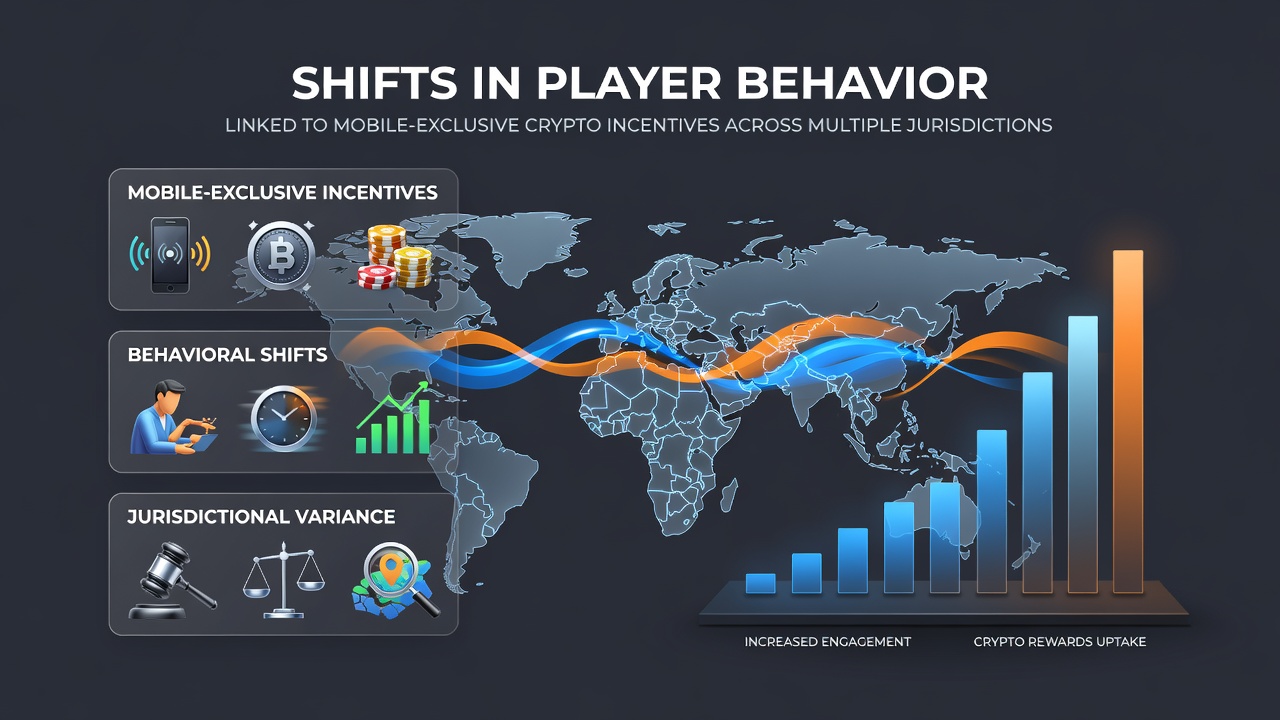
Players in jurisdictions with mature digital identity systems complete required steps faster than those in areas still developing such frameworks, and this speed difference directly influences how quickly reward systems activate and shape subsequent wagering choices.
Data Sources and Research Findings
Figures released by the American Gaming Association in November 2026 document a 22 percent increase in mobile session starts linked to crypto-specific promotions within participating U.S. markets, and comparable metrics from the Australian Gambling Research Centre indicate parallel growth in reward-driven logins without corresponding spikes in total wager volume.
Academic analyses from university-affiliated gaming research centers further separate behavioral responses by incentive type, showing that no-deposit crypto rewards produce higher trial rates yet lower repeat engagement compared with deposit-matched offers, and these distinctions hold across sampled populations in both regulated North American and Asia-Pacific environments.
Conclusion
Tracking through the close of 2026 demonstrates that mobile-exclusive crypto incentives continue to influence how players initiate, sustain, and conclude their activity across jurisdictions, with outcomes shaped by local regulations, infrastructure readiness, and incentive design rather than by uniform global trends. Ongoing data collection from regulatory submissions and operator analytics will clarify whether these patterns stabilize or evolve further as additional markets implement comparable programs.